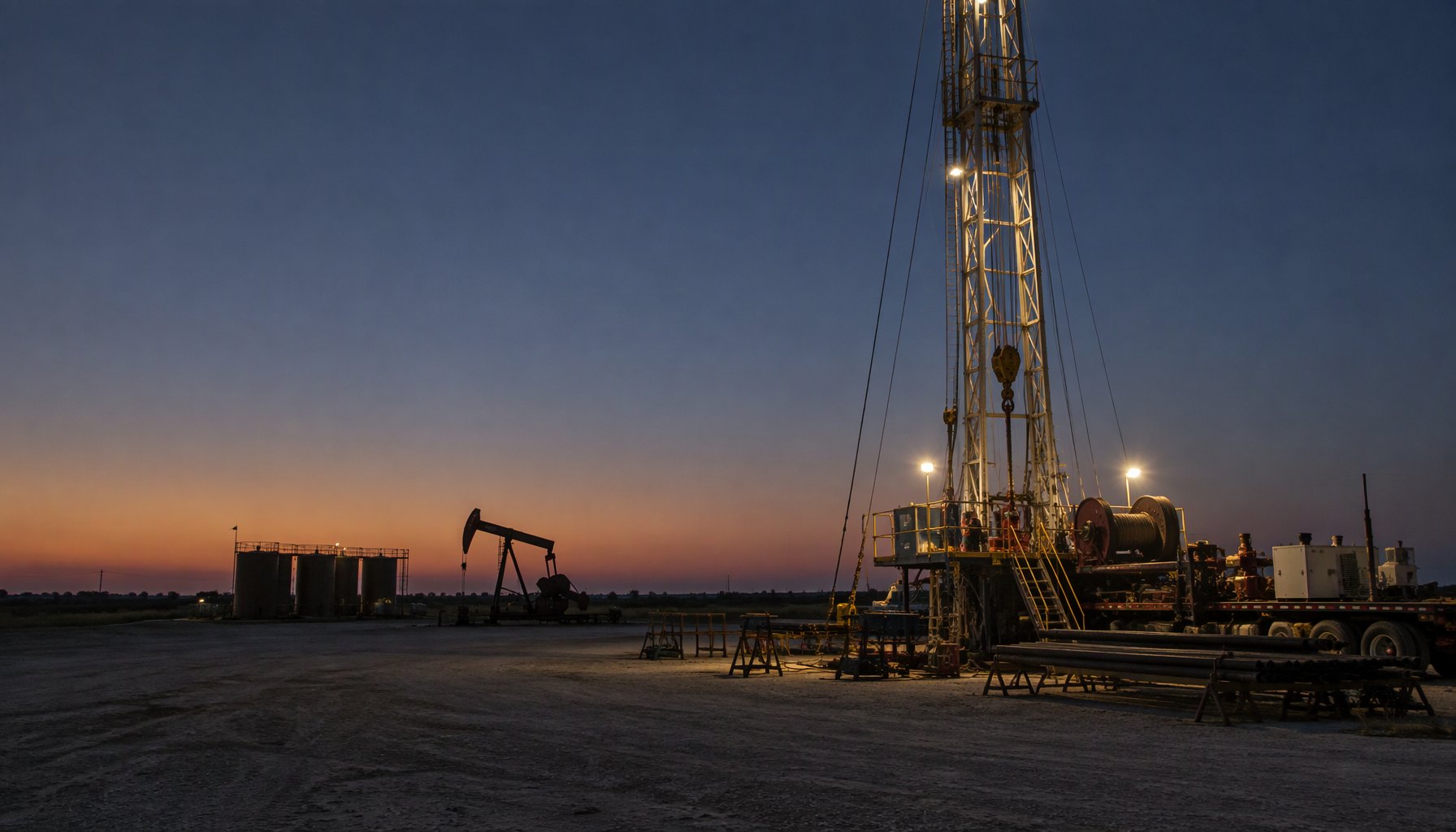

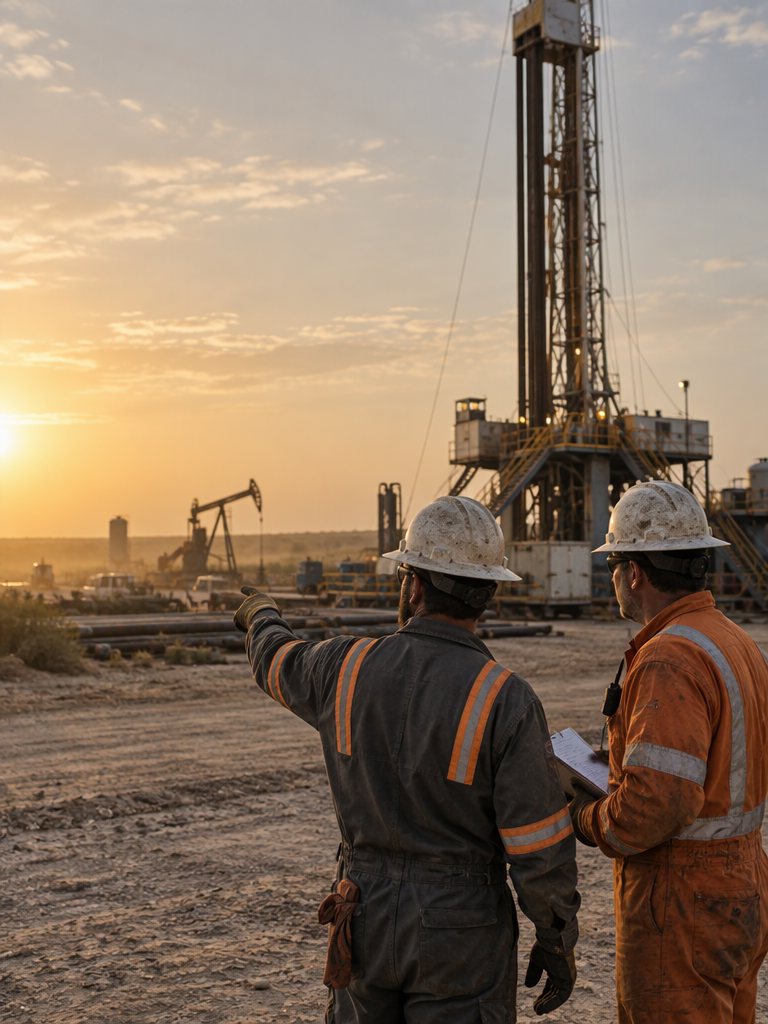
Our supervisors live where they work.
No call center, no handoff to a contractor in another time zone. When a landowner calls at 2 a.m., the person who answers knows the route, the battery, and the history of the well.
That is the whole model. It is expensive to staff this way and it is why our wells stay online.
One night
on the route.
The work is routine until it is not. A supervisor's shift is built around the handover, the route, and the alarm that changes the plan.
- 17:30
Handover
Day shift walks the night supervisor through the well status, the two problem batteries, and the water transfer scheduled for midnight.
- 18:40
Route
Thirty-one wells, four batteries, two saltwater disposal sites. The route is adjusted for the wells that have been making water faster than the plan.
- 22:15
Alarm
SCADA flags a pressure drop on a Wharton County well. The supervisor is already on the lease and finds a failed packing gland before the well loads up.
- 02:00
Line failure
A flowline fails on a neighboring property. The landowner calls the field line; the supervisor is on the porch by three, with the repair crew dispatched.
- 05:30
Report
Production, downtime, and the repair plan are entered before the day team starts. Nothing waits for a Monday meeting.
Safety is an operating condition.
A safe well is a well that is being run correctly. We do not separate the two, and we do not reward a production number that was bought with an unsafe shortcut.
We report releases to the Railroad Commission of Texas and the Texas Commission on Environmental Quality as required, and we tell the surface owner what happened in plain language.
If you see a leak, spill, or well-control event.
Call the field line. Do not use email for an emergency. A supervisor answers any hour, every day of the year.
When you call, have this ready.
Stay upwind and away from the release. Do not attempt to shut in equipment. The supervisor will tell you what to do when they call back.
Meet the field team.
The people who run the route are the people who answer the phone. Start a conversation with the field office.