01 / Subsurface
Seismic & geology
3D seismic, vintage well logs, and offset production tied to one question: where does the rock actually hold hydrocarbons?
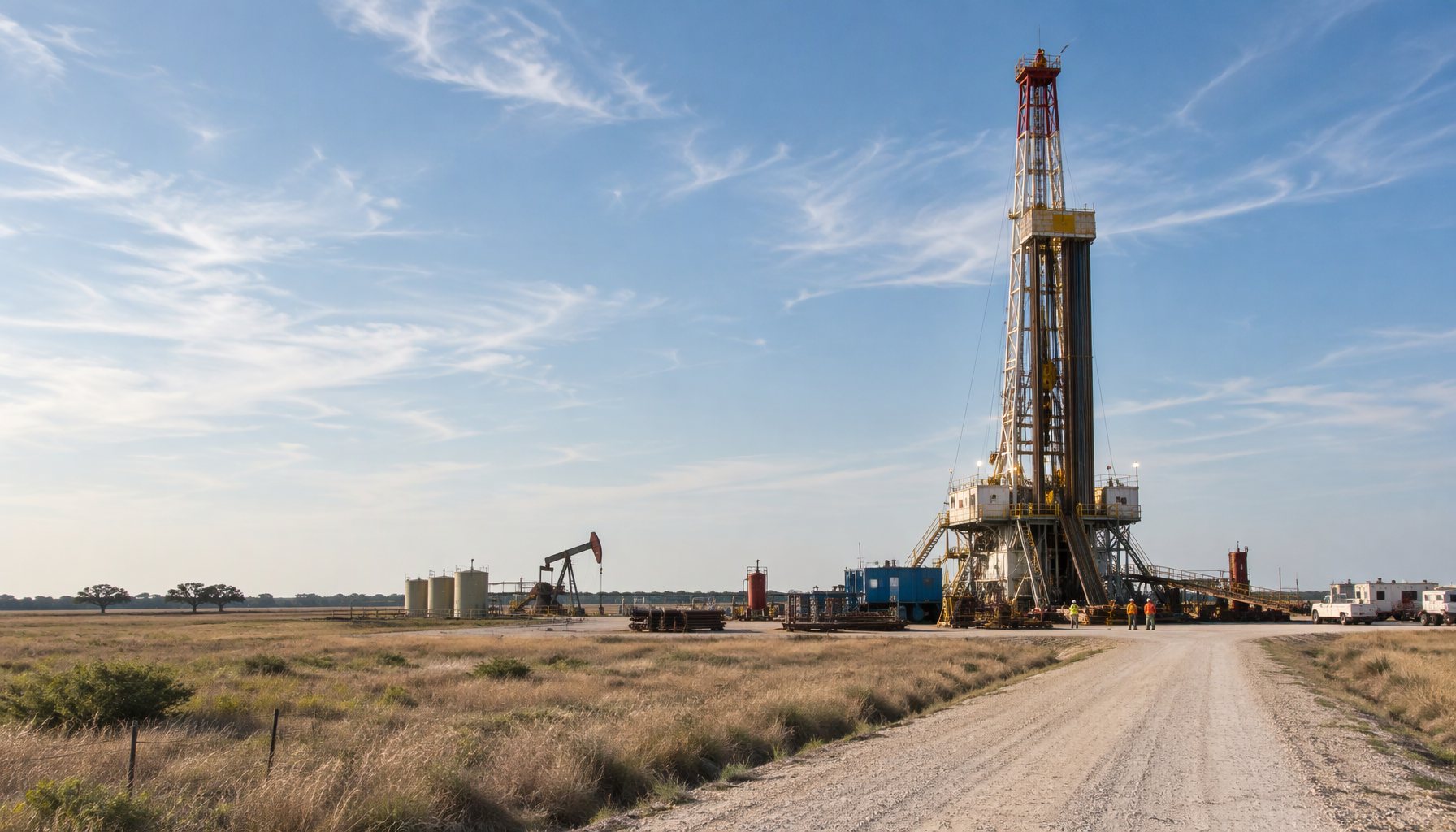
Four disciplines, one operating standard. We keep the subsurface, the rig, and the lease under one roof — so the people who plan the well are the people accountable for it.
Most operators hand a well from geologist to driller to completion engineer to production. We don't. The same team scopes the subsurface, sets the plan, watches the rig, and answers for the barrel six years later.
That model narrows what we buy. We look for mature fields with long production histories, existing infrastructure, and a clear reason the last operator left production behind — a mechanical failure repeated too long, a waterflood that was never tuned, a set of logs nobody reinterpreted.
Then we do the unglamorous work: rework the lift, repair the battery, re-perforate, and keep the lease staffed. Production is won in the details, not the deck.
Each discipline has a named owner and a written handoff. No work moves forward without the next team signing the assumptions it inherits.
Operating standards3D seismic, vintage well logs, and offset production tied to one question: where does the rock actually hold hydrocarbons?
Directional plans built around the completion, not the other way around. One drilling supervisor on every well, start to finish.
Multi-well pads and disciplined completions, sized to cash flow and planned with water and takeaway in mind.
Daily pre-job meetings, a stop-work standard every crew owns, and our own supervisors on the lease — no call center.
We would rather pass on ten deals than carry one we cannot operate. Once we sign, the schedule is short and the handoffs are named.
Production history, title, wellbore condition, and a field visit before an offer. We underwrite the base production, not the upside case.
Reservoir, drilling, and completions sit in the same room. The plan is written around takeaway, water disposal, and the lift method we will run for the next decade.
One supervisor per well, daily cost and progress reporting, and a stop-work standard that applies to every contractor on location.
Disciplined stage design, measured break-down, and a flowback plan sized to the battery and sales line already in place.
Our field team takes the well at handover and keeps it. Optimization is routine maintenance done on schedule, not a project that starts after a failure.
Anyone on a Highside lease can stop the job. That authority is written into every contractor orientation and repeated at the daily pre-job meeting.
For a leak, spill, or well-control event, call the field line at +1 (702) 349-0905. It is answered by a supervisor, any hour.
Send the location, the production history, and what you think is broken. We will tell you honestly whether it fits.